
What Is E-E-A-T and Why It Matters for Gambling Websites
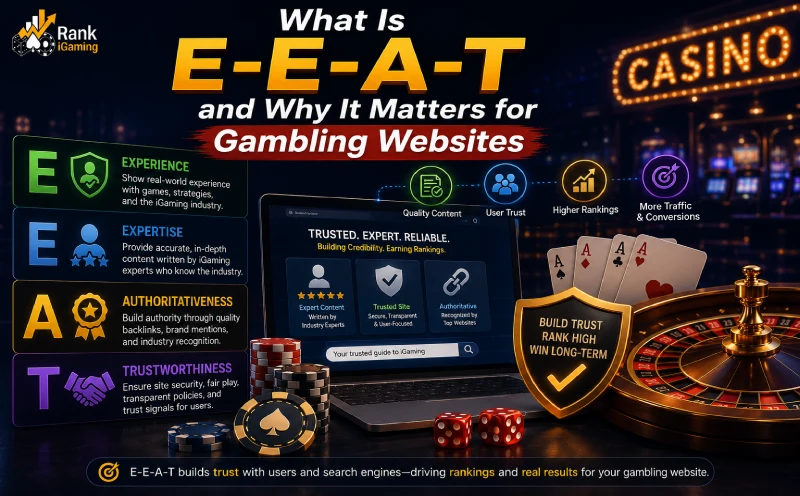
E-E-A-T is short for Experience, Expertise, Authoritativeness and Trustworthiness. It’s a framework Google uses to determine how much a piece of content can be trusted. If you’re attempting to understand E-E-A-T gambling websites and how it applies to your site, this guide breaks it down in simple words. This notion is even more important here than in most other businesses, as gambling directly affects people’s money and welfare. In this article we’ll go through what each of the pillars implies and how you can really construct it on your own site.
This isn’t simply some abstract Google thing. For operators and affiliates in this arena, understanding E-E-A-T can help drive decisions such as who creates your material, how you display license information and even how your site is structured. By the time you’re done with this article, we hope you’ll have a clear, practical understanding of how to reinforce these signals on your own site.
What Does E-E-A-T Stand For?
Let’s take a look at each of the four pillars individually (with examples that are genuinely relevant to gambling content, not generic SEO advice).
Experience
Experience is about whether the individual who is writing the content has actually utilised, played or tested what they are writing about.
For instance, a review of an online slot game. One version might be written by someone who actually played the game and saw how the bonus round felt and gave true details on the experience. Or it might be a generic, spinning description cobbled together from other sources, with no genuine testing behind it. Google knows the difference, generally. Readers know the difference, generally. And the first one develops a lot more trust.
The same is true for sportsbook and poker content. For example, a review of a betting platform’s mobile app will be significantly more persuasive if it includes details such as how seamless the live betting interface felt or how long a withdrawal actually took, rather than vague, generic assertions that could apply to any platform.
Expertise
Expertise is the subject matter expertise and true qualifications underlying the content.
You’ll see this in gambling in things like odds and strategy content. An article regarding betting odds published/reviewed by someone who actually has betting/industry knowledge has a lot more weight than anything authored by someone who has no true background in the subject. Readers looking for strategic guidance want to know the person behind it knows what they’re talking about.
Expertise doesn’t necessarily mean the writer has to be a professional gambler. It may be from a person who has a strong analytical or statistical background, or it may be that the information has been vetted by an expert before publication. The most important thing is that the knowledge behind the content is true and correct, not guessed at.
Authoritativeness
Authoritativeness is the site or author’s reputation and recognition in their space.
This could be being cited or quoted in well-known industry journals or contributing to them. When other dependable voices in the gambling industry cite you as a trusted reference point, that acknowledgement shows Google (and readers) that you’re a credible voice in the space.
Authority is also built over time with consistency. A site which consistently produces correct, well-researched content over time and gets recognised by others in the field will naturally gain greater authority than one which produces content occasionally or replicates content from competitors.
Trustworthiness
Trustworthy means accurate, safe and transparent and is the most strongly weighted pillar for YMYL issues such as gambling.
Trust signals here include visible license information, correct bonus terms & conditions, a secure site with SSL, responsible gaming messaging and honest disclosure of any affiliate affiliations. A gambling site that hides this information, or gets it wrong, gives a strong signal that it can’t be fully trusted, and that has actual ramifications for both readers and rankings.
Sometimes the little things are the most important. Things like an expired SSL certificate, a broken link to a license page, or the use of old bonus terms can be an unassuming erosion of confidence, both for the reader who is trying to decide whether to join up and for Google who is trying to judge whether your site is trustworthy enough to promote.
Why E-E-A-T Is Especially Important for Casino and Betting Sites
Google considers gambling content to be YMYL (Your Money or Your Life) content because to its direct effect on someone’s financial and general welfare. Accordingly, Google’s quality raters examine gambling content more thoroughly, as noted in the Google Search Quality Rater Guidelines.
One thing to be clear about here is that E-E-A-T isn’t one ranking criteria that Google analyses directly with one score. It’s a quality framework employed in these standards, and it correlates highly with ranking results, especially for YMYL issues like gambling. Google’s algorithms are educated on patterns that mirror these principles, which is why sites that clearly showcase strong E-E-A-T casino site signals tend to do better over time.
The practical impact of this is simple: low-trust gaming information is more likely to be suppressed in search results, even if technically well-optimized on paper. You can have amazing keyword targeting and clean technical SEO, but if your content doesn’t really show trust and knowledge, it is likely going to struggle to rank in this market. If you want to learn more about how challenging this market is to compete in, our guide on Why Is Casino SEO So Competitive delves into that topic a little deeper.
This is also why two sites can target the exact same keyword, follow comparable on page best practices, and still receive completely different results. Effectively, Google is seeking to shield consumers from incorrect financial advice or deceptive gaming information. So, the site with better author credentials, a visible license and more trustworthy material will usually win out.
How to Build E-E-A-T on a Gambling Website
Building high trust factors for casino SEO isn’t rocket science, but it does involve continuous work. It’s less about one large adjustment and more about stacking a series of smaller, real messages across your site over time. Here are five practical strategies to do just that.
Author Biographies and Credentials
Each piece must have an author page that is visible to the reader, with real, relevant gambling or business experience. Do not post articles under anonymous or generic bylines like “Admin.” Having a named individual with a real background works for users and Google alike because it indicates author expertise casino stuff that readers can actually trust.
Licensing and Regulatory Transparency
Clearly show your licensing bodies with necessary jurisdiction information, like the UKGC or MGA. This is one of the fastest methods to demonstrate to users, and Google, that your site is transparent and abides by the norms of the marketplaces it serves. It’s way better to have a dedicated, prominent page with this material than to hide it in a footer link no one sees.
Responsible Gambling Communications
Display links or disclaimers regarding responsible gaming in a visible location on your website. This is not just a legal need but is also a real trust signal that proves you care about the wellbeing of your readers and not just their deposits.
Real People Reviews and Testing it Out First Hand
Try to base your reviews on actual pictures, playtime notes or verifiable testing wherever possible, rather than spun or templated content. That kind of first-hand detail is just the sort of thing to show the “Experience” pillar of E-E-A-T at work.
Authoritative Backlinks and Mentions
Focus on earning links and mentions from recognized gambling publications or reputable news outlets, rather than low-quality directories. A handful of strong, relevant mentions will do far more for your authority than dozens of weak, unrelated ones.
Common E-E-A-T Mistakes Gambling Sites Make
Even well-meaning sites can unwittingly damage their own trust signals. Some of the common faults that hold back gambling sites are:
- Publishing anonymous or AI-generated content without a named author
- Licensing information that is hard to find or missing
- Many sites that duplicate or thin out additional pages
- There were no responsible gambling disclaimers apparent
- Making baseless claims with no proof or sources to support them
Frequently Asked Questions
Is E-E-A-T a direct Google ranking factor?
Not quite. Google uses a quality framework from its Search Quality Rater Guidelines—not a single quantitative signal. It is more strongly correlated to ranking results than to a specific algorithmic score.
Does E-E-A-T apply to affiliate sites too, not just operators?
Yes, and maybe even more so. Affiliate sites are usually subject to more scrutiny than other sites as they do not have their own gaming licence, making trust signals and honest, well-sourced content even more crucial to stand out.
How do I show “experience” if I don’t personally gamble?
One way to achieve this is to quote data that has been tested, use sources that have been validated or collaborate with expert reviewers who have hands-on experience. You can also credit people with first-hand experience of the games or markets you cover and make it clear in the byline or credits section exactly how that information was confirmed.
Final Thoughts
E-E-A-T isn’t a hack or a quick fix. It’s a long term investment. Trust that lasts is built with readers and Google alike through material that is compliant and has been reviewed by experts and shows true experience, topic knowledge, industry recognition, and transparency. This kind of trust doesn’t happen quickly, but with every author bio you fill out, every license detail you clear up, and every honestly written review you post, you build another brick to that foundation. If you’re also interested in how Google regards gambling content explicitly at a policy level our guide on Google Gambling Content Policy is a wonderful next read.
Need help developing content that hits all of these marks? We designed our iGaming content writing service to ensure that every piece we write has compliance, accuracy and real expertise, so your site can build the type of trust that lasts way beyond a single algorithm update.